FISHING KNOWLEDGE

Fish Species Guides

Browse our growing collection of freshwater species guides. Discover each fish through a clear photograph, its common and scientific names, and useful information about its appearance, habitat and behaviour.

A dark Arctic char with pale spots and orange fins above a stony bed

Arctic Char

Salvelinus alpinus

Arctic char has a streamlined salmonid shape, variable dark or olive colouring and pale spots along the flanks. In Britain, it is associated with deep northern lakes and other suitably cold, clean, well-oxygenated water systems, so populations are localised rather than widespread.

Its food includes aquatic invertebrates and, where appropriate, smaller fish. Seasonal movement and depth use can vary between individual waters, making local habitat an important part of its story.

A silver Atlantic salmon swimming above river stones

Atlantic Salmon

Salmo salar

Atlantic salmon has a streamlined silver form with dark spotting that can become more noticeable in freshwater. Its life cycle moves between suitable rivers and marine waters: young fish develop in freshwater before migration, while adults return from the sea to spawn in rivers.

In freshwater, young fish feed on drifting insects and aquatic organisms. At sea, adults have access to a different diet before their return journey changes their behaviour again.

A bronze barbel with prominent mouth barbels in clear water

Barbel

Barbus barbus

Barbel are long, streamlined river fish with a bronze-brown back, pale underside and distinctive pairs of barbels around the mouth. They are most associated with flowing rivers, especially gravel-bottomed reaches where current, cover and deeper runs meet. Their underside is adapted for searching along the riverbed, and they feed on a varied diet that can include invertebrates, larvae and other natural food carried by the flow. Barbel often move in loose groups and can become more active as light levels fall. Their preference for current means water conditions and the character of a river stretch can influence where they are encountered.

A slender silver bleak in clear freshwater

Bleak

Alburnus alburnus

Bleak is a small, slender, bright silver fish with an upturned mouth and a habit of moving in shoals. It favours open or gently moving water, where it often holds near the surface or in mid-water rather than close to the bed.

It takes tiny insects, larvae, plankton and other small food from surface and mid-water. Its shoals are also an important food source for larger predatory fish.

A brown trout with dark and red-spotted flanks

Brown Trout

Salmo trutta

Brown trout shows considerable variation, with brown, gold or olive tones and a mixture of dark and red spotting. It occurs in suitable rivers, streams and lakes, especially where water is cool and oxygenated; river and stillwater populations can look and behave differently.

Its diet is opportunistic, including insects, larvae, crustaceans and sometimes smaller fish. In some habitats it can be territorial, particularly where productive holding places are limited.

Local water, food and cover shape the colour and habits seen by observers.

A mottled bullhead with a broad head and raised dorsal fin

Bullhead

Cottus gobio

Bullhead has a broad, flattened head, large pectoral fins and mottled camouflage that suits life among stones and gravel. This bottom-dwelling fish is associated with clean, oxygenated streams and rivers, where it uses crevices and cover for shelter.

Larvae, small crustaceans and other bottom-living invertebrates make up much of its diet. During brighter periods it tends to remain hidden, emerging to search nearby surfaces and crevices.

A silver chub with large regular scales

Chub

Squalius cephalus

Chub has a strong, rounded body, broad head and large scales with dark edges. It is closely associated with rivers, using deeper pools, steady flows, rafts, overhanging trees and other cover; clear water often brings out its cautious nature.

Its diet is highly adaptable, taking insects, plant material, small fish and other available food. This flexible feeding explains why it may be encountered in many contrasting river situations.

Its confident outline can conceal a watchful response to disturbance near the bank.

A deep-bodied common bream in freshwater

Common Bream

Abramis brama

Common bream is deep and laterally compressed, often taking on a bronze tone as it matures, with a notably long anal fin. It commonly forms shoals in slower rivers, lakes, reservoirs and canals, moving into feeding areas when conditions suit.

It feeds by sifting soft sediment for larvae, worms, molluscs and other food. Shoals may gather over productive soft-bottom areas, but their movements remain dependent on local conditions.

A fully scaled common carp with a broad bronze body

Common Carp

Cyprinus carpio

Carp are robust freshwater fish with a broad body, thick lips and small barbels at the corners of the mouth. Common carp are fully scaled, while mirror carp have a more irregular scale pattern, yet both share the same species name. They are common in lakes, ponds, canals and commercial fisheries, usually favouring areas with warmth, cover and plenty of natural or introduced food. Carp are adaptable feeders and spend much of their time searching the bottom and margins. They can show cautious behaviour in clear or heavily fished waters, but may also move visibly near the surface in warm weather. Their varied forms make careful observation useful.

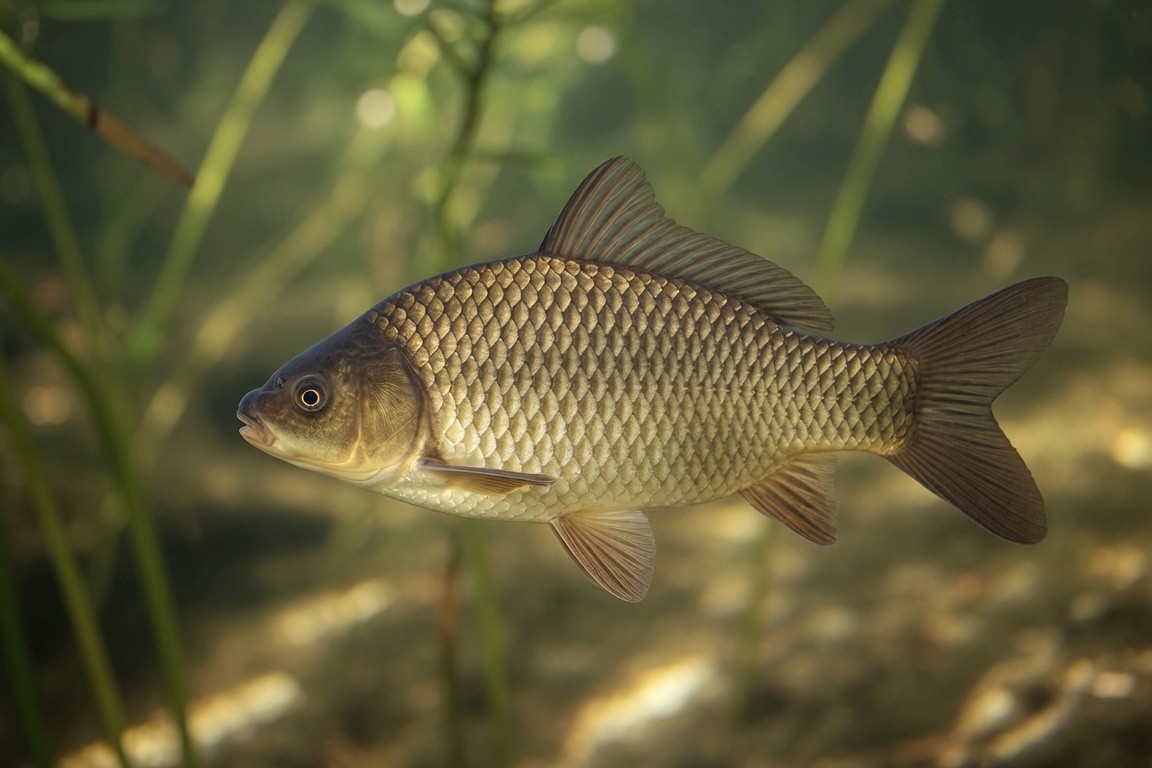
A golden crucian carp among aquatic plants

Crucian Carp

Carassius carassius

Crucian carp has a deep rounded body, golden-bronze colouring and small scales, but unlike common carp it has no mouth barbels. It is associated with ponds, small lakes and heavily vegetated stillwaters, where it can tolerate difficult low-oxygen conditions.

Insects, larvae, small crustaceans and plant material all feature in its diet. Feeding is often cautious, and careful identification matters because goldfish, common carp and hybrids can appear similar.

A streamlined silver dace above a stony riverbed

Dace

Leuciscus leuciscus

Dace is a slender silver fish with a relatively narrow head, forked tail and pale or yellowish fins. It travels in shoals through flowing, oxygenated rivers and streams, holding an active position in the current; it can superficially resemble a small chub.

It takes drifting insects, larvae and small aquatic organisms, using the flow to bring food within reach. The fish’s lively mid-stream stance is a characteristic part of its behaviour.

A long olive-brown European eel in clear water

European Eel

Anguilla anguilla

European eel has an elongated, snake-like body with a continuous fin profile and protective mucus-covered skin. It uses rivers, lakes, canals, estuaries and connected waters, often becoming most active at night or in low light, and has a remarkable migration between European freshwaters and the ocean.

Worms, insect larvae, crustaceans, molluscs, carrion and small fish may all be eaten. This broad diet and secretive movement help explain why the eel is often noticed only after dark.

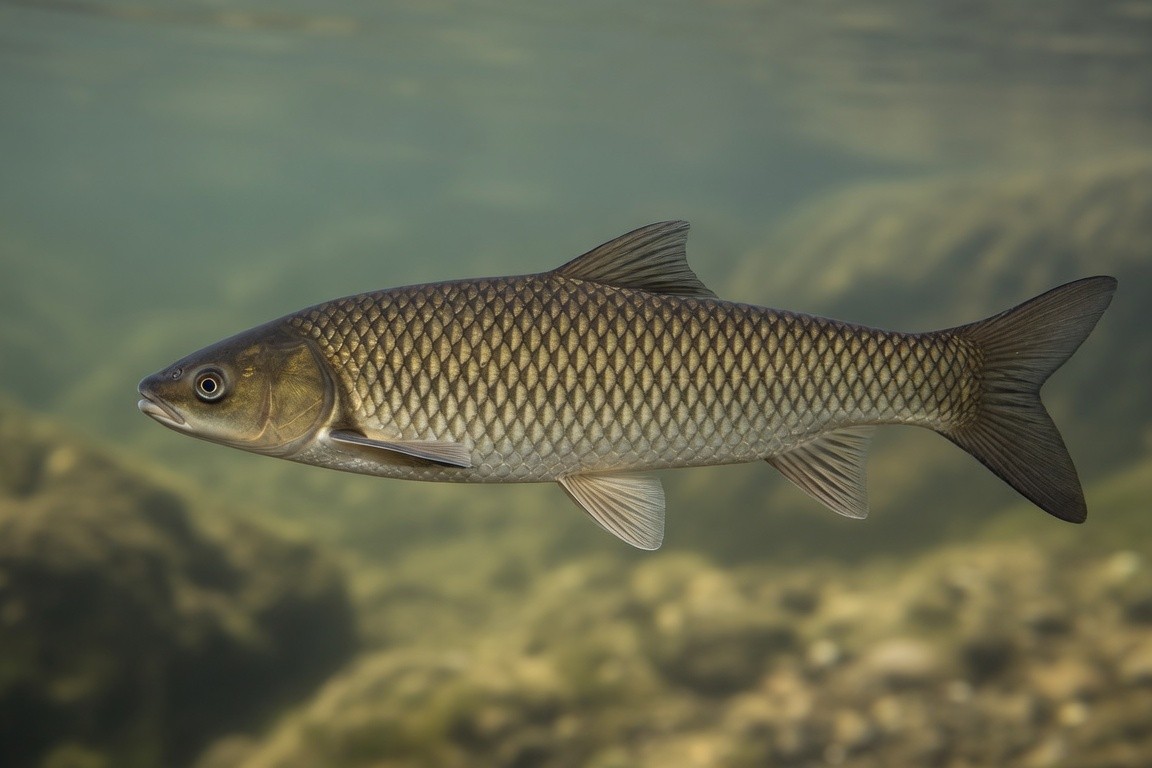
A large grass carp with evenly patterned scales

Grass Carp

Ctenopharyngodon idella

Grass carp has a long, powerful, relatively cylindrical body, broad head and large scales, without the mouth barbels of common carp. It is an introduced fish encountered in selected managed British fisheries, particularly vegetation-rich water where activity can increase as temperatures rise.

Plant material is central to its feeding, although its exact behaviour depends on the water. Its presence is linked to management decisions, so it should not be treated as naturally widespread.

A grayling with a tall patterned dorsal fin

Grayling

Thymallus thymallus

Grayling has a silver body, fine spotting and a large sail-like dorsal fin that is especially distinctive. In Britain it is associated with clean, cool, well-oxygenated rivers and gravelly reaches, where its streamlined form helps it hold position efficiently in flowing water.

Aquatic insects, larvae and drifting invertebrates form much of its food. It reads the flow well, making short adjustments while maintaining position in runs and glides.

A small gudgeon with mouth barbels over gravel

Gudgeon

Gobio gobio

Gudgeon is small and elongated, with mottled or spotted flanks, a downward-facing mouth and a pair of small barbels. It is a bottom-dwelling shoaling fish found in rivers, canals and some stillwaters, usually searching over sand, gravel and fine sediment.

It feeds on larvae, worms, small crustaceans and other organisms living on or in the bottom. Groups often move slowly as they search among loose material.

A silver ide in freshwater

Ide / Orfe

Leuciscus idus

The natural ide is silver-grey with a deeper body and powerful tail, often moving in shoals through mid-water. It may occur in selected British fisheries and ornamental waters. Golden orfe is an ornamental colour form of the ide, not an unrelated species.

Insects, crustaceans, plant material and occasional small fish form a varied diet. Its shoaling, mid-water behaviour can make a group conspicuous when light and water clarity allow.

A red, white and black koi carp

Koi Carp

Cyprinus carpio

Koi carp shows highly variable ornamental colours and patterns on the familiar common-carp body structure, including mouth barbels. Koi are domesticated ornamental forms of common carp, not a separate biological species, and are associated with ponds and selected managed waters.

Like common carp, it feeds across the bottom and mid-water on a varied omnivorous diet. Selective breeding accounts for its colours and patterns, while its general behaviour remains recognisably carp-like.

A leather carp with sparse large scales

Leather Carp

Cyprinus carpio

Leather carp has the usual common-carp body form but extremely reduced or almost absent visible scaling, sometimes with small scattered patches, giving the skin a thick-looking appearance. It is a scale-pattern form of common carp, not a separate species.

It explores the bottom for a varied omnivorous diet in suitable lakes, ponds and slower waters. When disturbed, its powerful movement and broad body can be particularly noticeable.

A small minnow with a dark lateral band

Minnow

Phoxinus phoxinus

Minnow is a very small streamlined fish with variable flank markings, often seen in shoals. It uses shallow clean streams, rivers and lake margins where cover is available, and its small size makes it important prey for larger fish and other wildlife.

Tiny insects, larvae, crustaceans, algae and organic material are all taken. Although the word minnow is used casually, not every small fish is a minnow.

Shoals can shift quickly between cover and open shallows as light changes.

A mirror carp with irregular large scales

Mirror Carp

Cyprinus carpio

Mirror carp has the familiar common-carp body, mouth barbels and an irregular pattern of large mirror-like scales that varies between individuals. It is a scale-pattern form of common carp, not a separate biological species, and is well known in managed British fisheries.

It is an adaptable omnivorous bottom-feeder in lakes, reservoirs, canals and slower rivers. Powerful movement and exploratory behaviour are typical when it searches for food and cover.

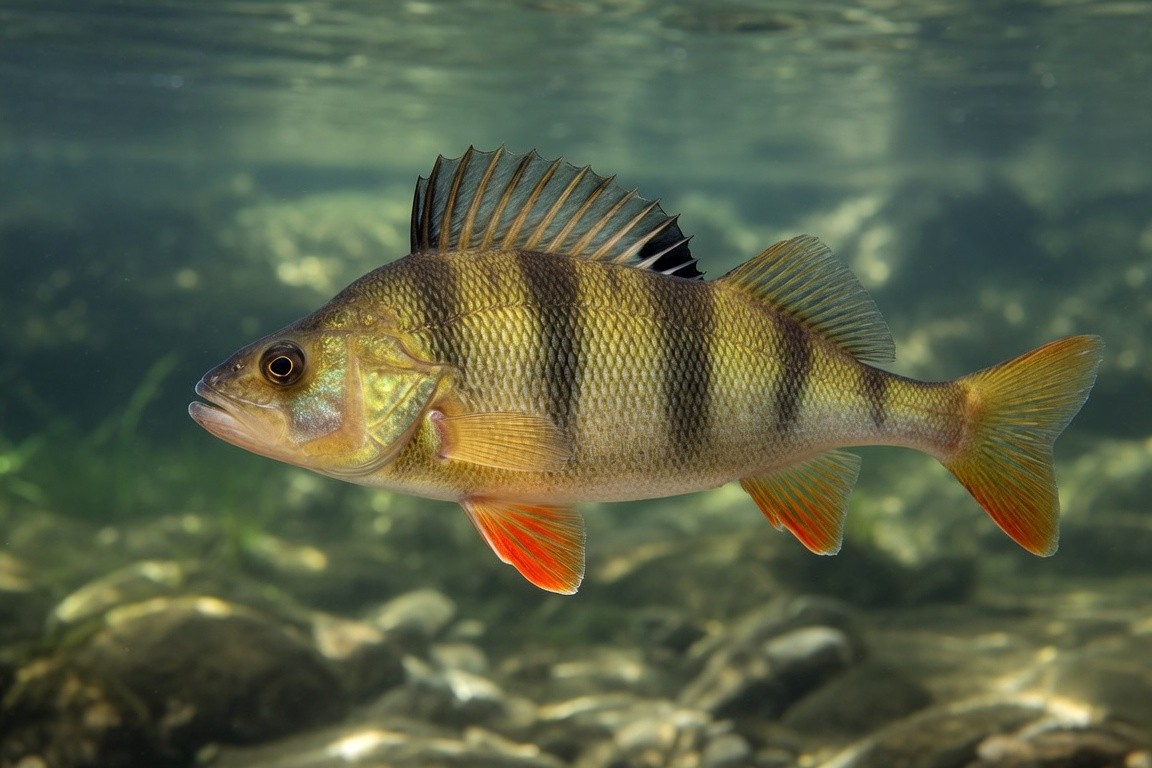
A European perch with dark vertical bars and red fins

Perch

Perca fluviatilis

Perch have a deep body marked with dark vertical bars, a spiny first dorsal fin and reddish pelvic and tail fins. They are widespread in stillwaters, canals, ponds and slower rivers, where they use cover such as reeds, snags, walls and drop-offs. Young perch often shoal, while larger individuals may become more solitary. They feed on invertebrates, small fish and other available prey, depending on size and habitat. Their bold pattern is a useful identifying feature, although colour can vary with water clarity and surroundings. Perch often investigate structure closely, making them a familiar sight in clear water.

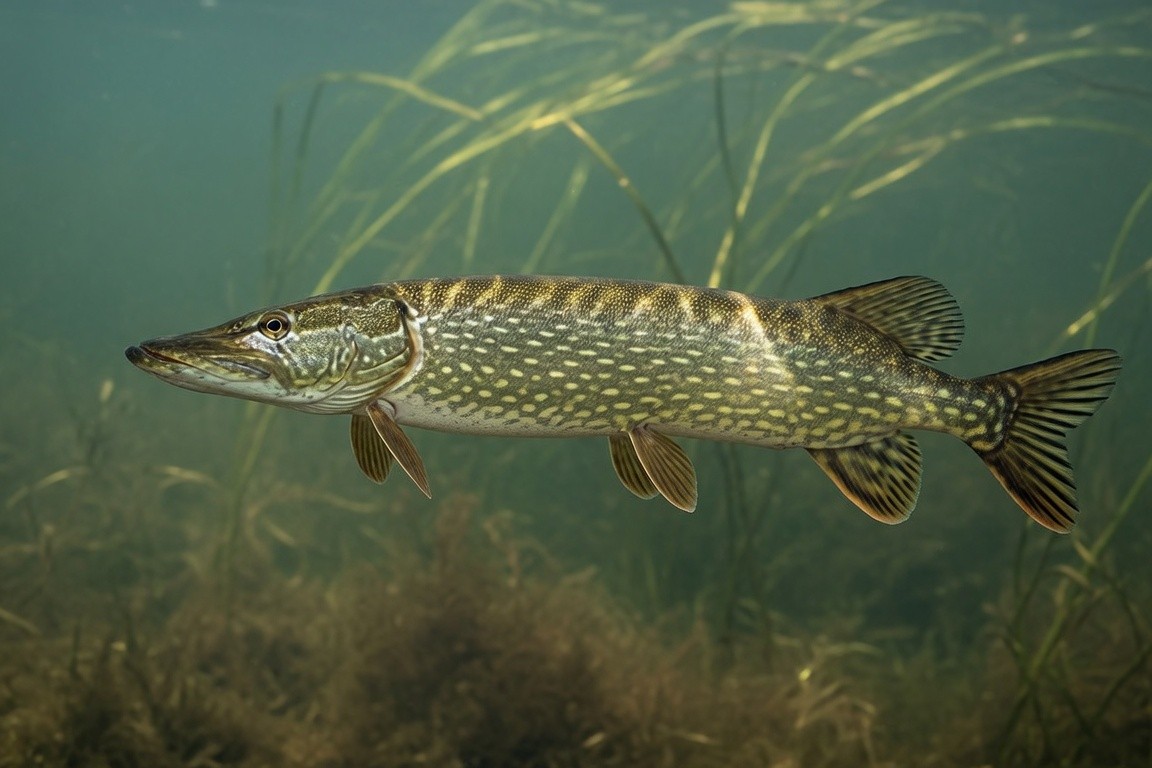
A northern pike with pale spots among underwater vegetation

Pike

Esox lucius

Pike are easily recognised by their long, torpedo-shaped body, duck-bill snout and pale oval markings on an olive-green background. They live in a wide range of freshwater habitats, including lakes, canals, drains and slow rivers, particularly where weed beds, margins or submerged structure provide cover. Pike are ambush predators, often waiting motionless before making a quick strike at fish or other suitable prey. Their eyes sit high on the head, giving them a useful view of the water around them. Smaller pike can be encountered in surprisingly shallow areas, while larger fish may favour deeper water close to cover.

A rainbow trout with a pink side stripe and dark spots

Rainbow Trout

Oncorhynchus mykiss

Rainbow trout has a streamlined salmonid body, dark spotting and a pink or iridescent band along the flank, though colour varies between environments. It is introduced and frequently stocked in British fisheries rather than naturally widespread across Britain.

It takes insects, larvae, crustaceans and smaller fish, remaining an active swimmer in cool oxygenated water. Stocked populations vary between waters, so appearance and behaviour can differ locally.

Its alert movement and changing sheen are familiar features in clear water.

A silver roach with orange-red fins

Roach

Rutilus rutilus

Roach is silver-bodied with a red or orange eye, reddish fins and a deeper profile in mature fish. It commonly travels in shoals through rivers, canals, lakes and reservoirs, adapting its feeding between the bed, mid-water and surface according to conditions.

Its omnivorous diet includes insects, larvae, plant matter and small aquatic organisms. Roach may resemble rudd, but its eye, mouth and overall colour provide useful clues.

A golden rudd with vivid red fins

Rudd

Scardinius erythrophthalmus

Rudd has golden or bronze flanks, bright red fins and an upturned mouth. Its dorsal-fin position is a useful feature when distinguishing it from similar roach. It favours still or slow water with weed and surface cover, and often feeds in mid-water or near the surface.

Insects, plant material and small aquatic organisms are taken from surface and mid-water. Roach can appear similar, though rudd’s golden tone, upturned mouth and fin placement help separate them.

A ruffe with mottled markings and a spiny dorsal fin

Ruffe

Gymnocephalus cernua

Ruffe, also known traditionally as pope, is a small perch-like fish with mottled brown colouring, large eyes and a spiny dorsal fin. It is a bottom-dweller in rivers, canals, lakes and reservoirs, and is often active in subdued light or turbid water.

Insect larvae, small crustaceans, worms and other bottom organisms provide food. Its large eyes and preference for subdued conditions suit a life close to the bed.

A silvery sea trout with scattered dark spots

Sea Trout

Salmo trutta

Sea trout has a silver migratory appearance with dark spotting and moves between freshwater and marine environments. It returns to rivers for spawning after feeding and growing at sea. Sea trout is the migratory form of Salmo trutta, not a separate species from resident brown trout.

Its diet changes between life stages and locations, with marine feeding supporting growth before the freshwater return. The distinction from resident brown trout is one of lifestyle and appearance, not species identity.

A pale silver bream with a deep body

Silver Bream

Blicca bjoerkna

Silver bream is bright silver with a deep but relatively compact profile and a conspicuously large eye. It commonly shoals in slow rivers, canals and stillwaters, feeding near the bottom. Its fin and body proportions help distinguish it from the deeper common bream.

Larvae, small crustaceans, molluscs and plant material are picked from the bottom. It shares habitats with common bream but usually has a brighter, more compact look.

Subtle differences in body shape become clearer when several fish are observed together.

A slender silver smelt in clear water

Smelt

Osmerus eperlanus

Smelt is slender, silver and delicate in appearance, with a distinctive scent traditionally associated with the species. It moves in shoals and is associated with estuaries, lower rivers and some freshwater systems; migratory populations move between saltwater and freshwater.

Plankton, small crustaceans, larvae and small fish are taken in open water. Distribution varies between regions and systems, so it should not be assumed common everywhere in Britain.

A mottled stone loach resting above gravel

Stone Loach

Barbatula barbatula

Stone loach is slender and mottled, with a bottom-facing mouth and six small barbels around it. Its camouflage suits gravel and stones in clean streams and rivers. It is a bottom-dweller, largely active in low light, and uses stones and cover during daylight.

It searches for insect larvae, worms and small crustaceans among stones and fine material. The fish’s cryptic pattern and use of cover make it easy to overlook in daylight.

An olive-green tench with a rounded body and red eye

Tench

Tinca tinca

Tench are compact, olive-green fish with very small scales, a rounded profile and a noticeable red or orange eye. They are most at home in quiet, weedy waters such as ponds, gravel pits, lakes and sheltered canal sections. Their thick coating of mucus and muted colour give them a distinctive appearance in comparison with many other coarse fish. Tench commonly feed close to the bottom, using their small barbels to investigate silt, weed edges and natural food sources. They are often associated with warmer months and calm conditions, although behaviour varies by water. Their habit of moving quietly through vegetation has earned them a special place in British angling folklore.

A three-spined stickleback with raised dorsal spines

Three-Spined Stickleback

Gasterosteus aculeatus

Three-spined stickleback is small and streamlined, with three prominent dorsal spines and armoured side plates. It tolerates freshwater, brackish and coastal habitats. During breeding, males may show brighter colour and establish nests, fanning and guarding the eggs; this colour is not shown by every individual.

Larvae, tiny crustaceans and other small organisms provide food. Outside breeding, its behaviour and colouring may be much less conspicuous, but the spine arrangement remains a strong clue.

A broad-headed Wels catfish with long sensory barbels

Wels Catfish

Silurus glanis

Wels catfish are large, smooth-skinned freshwater fish with a broad, flattened head, wide mouth and long sensory barbels. In Britain they are found in selected stillwaters, lakes and slow-moving waters where there is depth, warmth and plentiful shelter. Their skin is usually mottled olive, grey or brown rather than scaly, helping them blend into low-light environments. Wels are opportunistic feeders and use their senses to locate food, particularly when visibility is poor. They are often most active in warmer conditions and around dusk or after dark. Their size and distinctive shape make them unlike most familiar British coarse fish.